
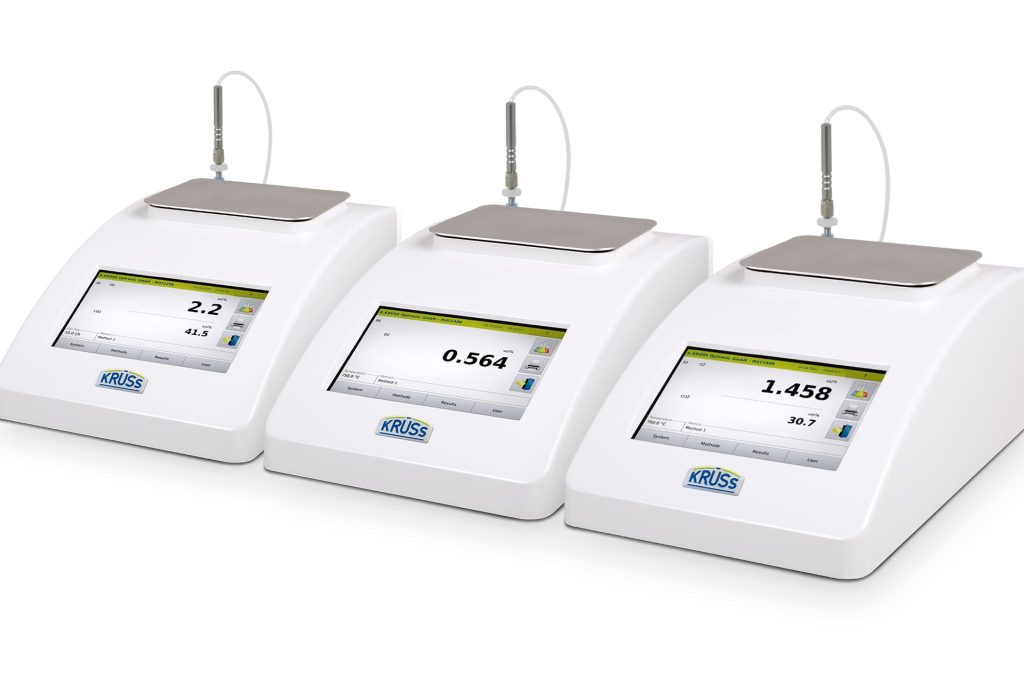
Product overview
The MAT1000 series draws a small package-headspace sample to check oxygen, carbon dioxide and calculated nitrogen, with four sensor combinations for range, throughput and CO₂ requirements.
Models and core specifications
| Model | Measured gases | O₂ sensor/range | CO₂ sensor/range | Average time |
|---|---|---|---|---|
| MAT1100 | O₂ | Electrochemical; 0.5–35 vol.% | — | Approx. 7 s |
| MAT1200 | O₂, CO₂, calculated N₂ | Electrochemical; 0.5–35 vol.% | NDIR; 0–100 vol.% | Approx. 10 s |
| MAT1400 | O₂ | ZrO₂; 0–100 vol.% | — | Approx. 5 s |
| MAT1500 | O₂, CO₂, calculated N₂ | ZrO₂; 0–100 vol.% | Dual-channel NDIR; 0–100 vol.% | Approx. 10 s |
Advantages
Atmosphere testing and model selection
- Tests O₂ and CO₂ in modified-atmosphere packaging for spot checks and gas-mixture monitoring at packaging machines.
- MAT1100 measures O₂; MAT1200 measures O₂ and CO₂. Both use an electrochemical O₂ cell with a 0.5–35 vol.% range.
- MAT1400 and MAT1500 use zirconia O₂ sensors covering 0–100 vol.%; MAT1500 also measures CO₂.
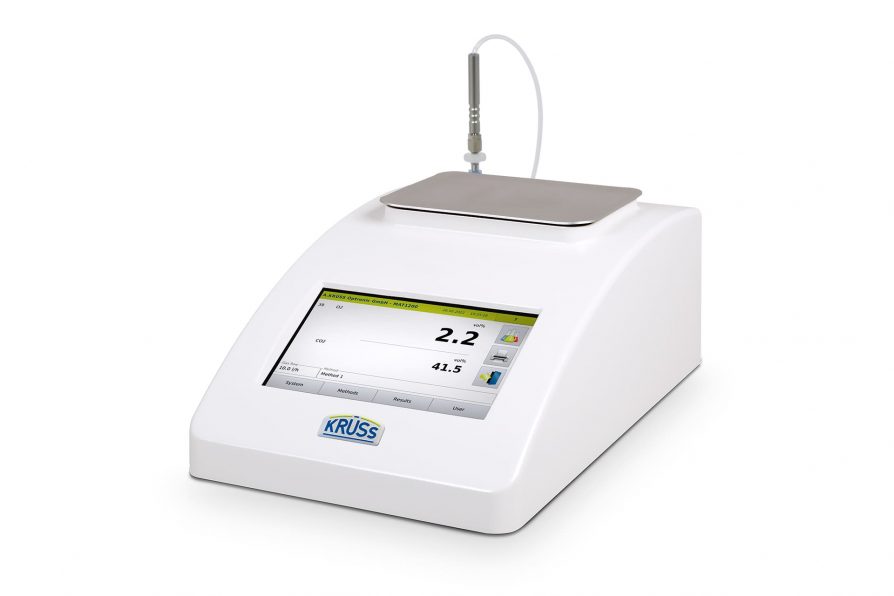
Sensors and measuring boundaries
- Electrochemical cells suit occasional checks; O₂ repeatability ±0.2 vol.% and resolution 0.1 vol.%.
- Zirconia absolute accuracy ±0.02 vol.% at O₂ <1 vol.%; relative error ±3% above 1 vol.%; resolution 0.001 vol.%.
- MAT1200/MAT1500 dual-channel non-dispersive infrared (NDIR) cells measure CO₂ over 0–100 vol.% with ±0.5 vol.% repeatability.
- N₂ is calculated as the residual gas fraction, not measured by an independent sensor; zirconia sensors have cross-sensitivity to flammable gases.
Operation and quality records
- 7.0-inch, 800 × 480 touchscreen with keyboard, mouse and barcode-scanner support.
- More than 10,000 methods and users; product/batch identifiers, alarm limits and user management.
- Measured-value stabilisation, air-pressure display and menu-guided adjustment; MAT1200 CO₂ measurement includes pressure and temperature compensation.
Technical data
| Specification | MAT1100 | MAT1200 | MAT1400 | MAT1500 |
|---|---|---|---|---|
| Average measurement period | 7 s | 10 s | 5 s | 10 s |
| Minimum headspace (after pre-rinse) | 7 ml | 10 ml | 5 ml | 5 ml |
| Warm-up time | Quickly ready | 5 min | 10 min | 10 min |
| Ambient temperature | 5–40 °C | 5–40 °C | 10–50 °C | 10–50 °C |
| O₂ range | 0.5–35 vol.% | 0.5–35 vol.% | 0–100 vol.% | 0–100 vol.% |
| O₂ repeatability (EC) | ±0.2 vol.% | ±0.2 vol.% | — | — |
| O₂ resolution | 0.1 vol.% | 0.1 vol.% | 0.001 vol.% | 0.001 vol.% |
| CO₂ range | — | 0–100 vol.% | — | 0–100 vol.% |
| CO₂ repeatability / resolution | — | ±0.5 / 0.1 vol.% | — | ±0.5 / 0.1 vol.% |
| Item | Specification |
|---|---|
| Adjustment | Automatic, menu-guided |
| Methods and users | More than 10,000 |
| Operation and display | 7.0-inch capacitive touchscreen, 800 × 480 pixels |
| Interfaces and integration | USB, RS-232, Ethernet; LIMS integration |
| Measurement-gas humidity | <90% RH, non-condensing |
| Dimensions (W × H × D) | 200 × 150 × 350 mm |
| Weight | 4.6 kg |
| Supply / frequency | 100–250 VAC; 50/60 Hz |
| Maximum power consumption | 60 W |
Average periods apply after warm-up; minimum headspace volumes apply after pre-rinse. vol.% denotes volume percent. See the zirconia accuracy conditions above.
Application areas
For modified-atmosphere quality control of food, beverages, coffee, milk powder, meat, pharmaceuticals and other packaged goods.
Related accessories and consumables
Stainless-steel sampling needles (0.9 × 38 mm, pack of 12), PTFE dust filters, self-adhesive septa and protective covers are available separately.
Service support
- Experienced specialists provide product selection, application and operation support.
- Calibration, maintenance and maintenance contracts can be discussed as required.
Selection guidance
Select by O₂ range, whether CO₂ is measured, sample throughput and expected residual oxygen. For low-residual-oxygen and high-throughput work, compare sensor technology and average measurement time.